Labour stability
Keeping Canada’s supply chains moving.

The challenge.
When supply chains stop, Canada stops. Shipments are delayed, production slows, and businesses face mounting costs.
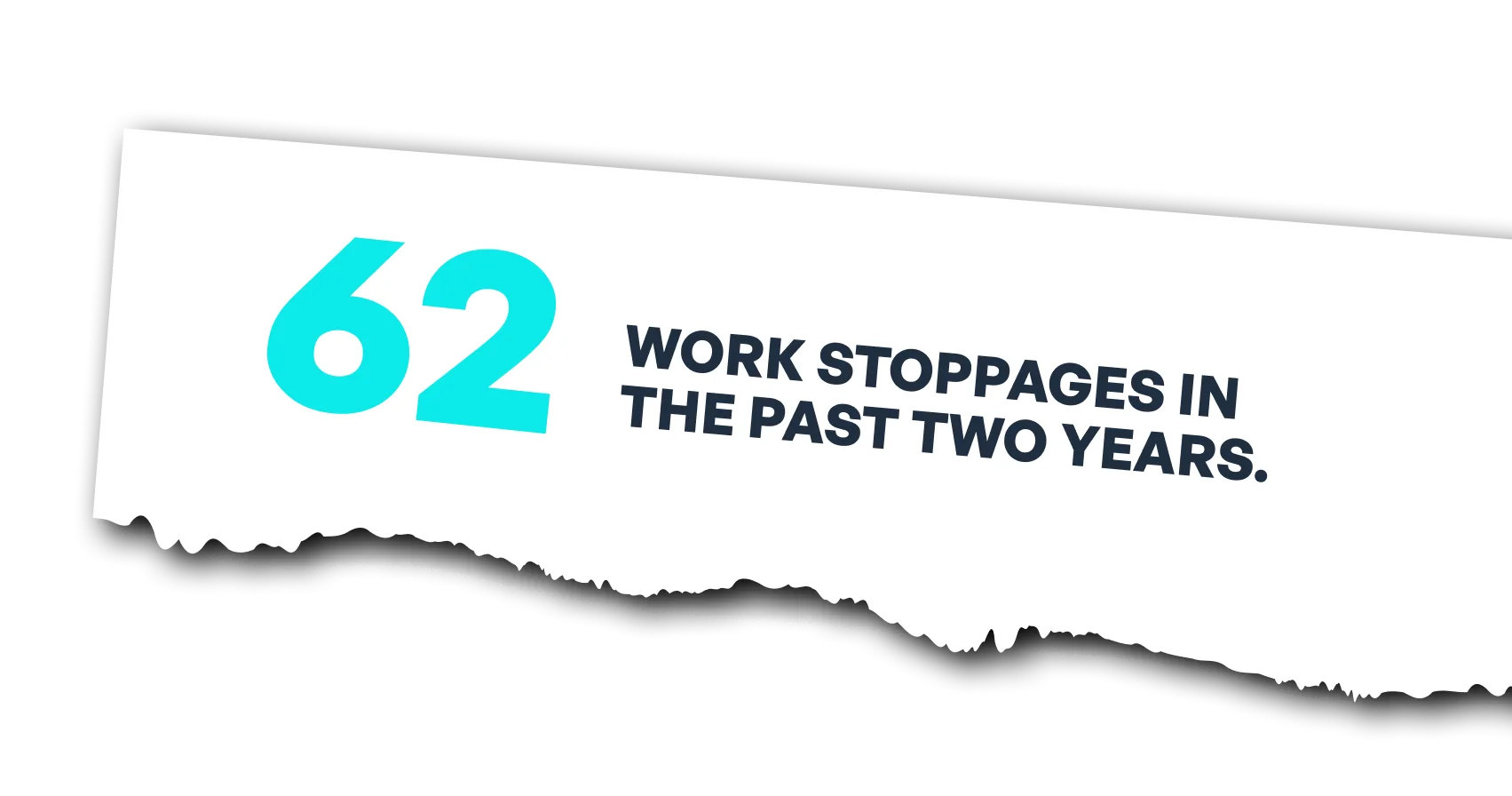
Recurring strikes and work stoppages have had serious economic consequences and have undermined global confidence in Canada's reliability as a trading partner. From 2023 to 2024 there was a sharp increase in work stoppages in the transportation sector, numbering 62 occurrences. These stoppages resulted in 230 thousand lost workdays in 2023 and 1.3 million lost workdays in 2024 – marking the highest number of person-days lost in the sector since 1966.
The cost.
Canada’s economy relies on the steady flow of goods.
Work stoppages disrupt this flow, causing widespread losses: businesses face delays and lost contracts, producers deal with storage and supply pressures, and workers face reduced hours and uncertainty. Repeated disruptions weaken confidence in Canada as a reliable place to invest, trade, and operate, undermining our global competitiveness.
The solution.
We’re calling for a predictable, balanced labour stability framework that ensures Canada’s supply chains remain reliable and competitive.
Successive governments have recognized the critical role of supply chains to Canada’s economy by restoring services in the event of work stoppages, but political delays make these actions unpredictable. Canada needs a better approach that respects collective bargaining while protecting the public interest.
The time to act is now
A strong economy depends on reliable movement. It’s time to put in place a system that works for workers, industries, and Canadians.
Let’s fix problems before
They halt progress.
Our signatories